Before You Buy Peptides: How to Read a COA, Spot a Scam, and Not Get Burned
The number one question I get is where to find peptides and how to buy them. I’m not going to hand you a source list — the useful part isn’t where, it’s how to not get burned once you’re there. This blog is about learning how to evaluate what you’re buying, spot the red flags, and stack the odds in your favor.
By Jason Jeffries · July 5, 2026 · Reviewed by Dusty Samples
The first question I get from almost everyone is the same one: where do you find peptides, and how do you actually buy them? I’m not going to hand you a list of sources, and by the end of this you’ll understand why that isn’t the useful part anyway. Like a lot of people, I started at the pricier, more buttoned-up end, and over time I drifted toward cheaper, riskier sources. The deeper I went, the more I realized that the biggest risk wasn’t buying peptides — it was assuming the seller’s claims were enough. The further you get from a pharmacy, the less you can rely on trust and the more you have to rely on verification. Let me be clear: I’m not here to talk you out of this. People navigate this market carefully every day, myself included. I’m here to make sure that if you’re going to, you go in with your eyes open and the odds tilted your way. This is everything I learned about doing that, minus the part where I point you at a vendor.
There’s no regulator in this market, which means you are the quality control. That’s not a reason to walk away — it’s the job. Know the risk tier you’re in, demand a batch-matched COA you can verify yourself (and ideally test a batch yourself), and learn the scam patterns cold. Do those and you’re doing this about as safely as it can be done. This guide walks through each of those, and it doesn’t name or point you to a single vendor.
The further from a pharmacy you get, the more you’re on your own
Peptides reach you through one of three channels, and they line up as a risk ladder. The higher you climb for a lower price, the more the safety net disappears, and the more the job of verifying what’s actually in the vial falls to you.
1. Through a prescriber, a clinic or doctor. The only tier with a real safety net: a licensed provider, a pharmacy, an actual label, and someone accountable if something’s wrong. It’s the priciest and the most limited on what you can get, but it’s the only path where you aren’t the last line of defense. If you can go this route, it’s the one I’d point anyone to first.
2. Through a third party, a reseller. A step out from the pharmacy: someone who buys and resells, anywhere from an established website down to a stranger in your messages. Accountability runs the full range here, and as a loose rule, the flashier and easier the sell, the more I’d want to verify before I trusted it. There’s one hard rule I can hand you, but it lives down in the scams section, so hold that thought.
3. Direct from the manufacturer. The furthest out and the cheapest, and the tier where the protections you’d get elsewhere are simply gone: no recourse if something’s off, no label you can trust by default, potential customs exposure, and the full job of proving identity, purity, and sterility on you. It’s cheapest for a reason, and it demands the most diligence, on every single order. Done carefully it’s manageable; done lazily it’s where people get burned.
The pattern underneath all three: price goes down, and the trust you’re forced to place in a stranger goes up. Nobody checks the work but you. The good news is that checking is a learnable skill, and the rest of this guide is that skill.
The part that actually makes me angry
The dirty secret of this whole industry: it’s largely the same raw material no matter which tier you buy from. The overwhelming majority of gray-market peptide raw material is made in China, often in the very facilities that also supply the legitimate industry. That same raw material feeds much of the chain, from gray-market resellers a long way up toward the buttoned-up side. So the idea that a pricier source is automatically “cleaner peptide” is often a myth.
But here’s the trap, and it’s the whole point of this guide: same raw origin does not mean same product. What you pay for as you move up the tiers isn’t different peptide. It’s everything that happens after the factory: independent testing, purification, sterile handling, verified dosing, honest labeling, and someone accountable when it’s wrong. Strip those away and the lower price isn’t free money. It’s the bill for doing every one of those checks yourself, which is exactly what the rest of this teaches.
So no, “it all comes from China anyway” is not a reason to skip to the source and save money. It’s the opposite. If the raw material is the same everywhere, then the only thing separating a verified vial from a mystery one is that verification layer, and at the bottom tier, that layer is you.
Watch the label games too. When a seller tells you it’s “compounded in the United States,” that usually describes the last step, not where the peptide itself came from. In the gray market, a lot of “US brands” are a marketing layer sitting on top of the same upstream supply, the vial gets imported and the brand goes on it. The logo on the label tells you almost nothing about what’s inside. The only thing that does is a batch-specific test you can verify. So the brand worth trusting is the one that hands you that, and the raw compound being cheap is exactly why the markup at a legitimate tier is almost never for the molecule. It’s for the testing, a payment method that can be reversed if you get burned, and distribution that doesn’t put your order at customs risk in the first place. That premium is the product.
There is also a difference between real compounding and what usually gets called that. True compounding is a licensed pharmacy taking pure active ingredient from an FDA-registered facility and preparing it from scratch — a regulated process with a real chain of custody. What a lot of the gray market means by “compounded” is really just reconstituting: finished, freeze-dried vials that came from overseas, mixed with bacteriostatic water and relabeled. Same word, completely different thing — and only one of them tells you anything about quality.
How to read a COA (and spot a fake)
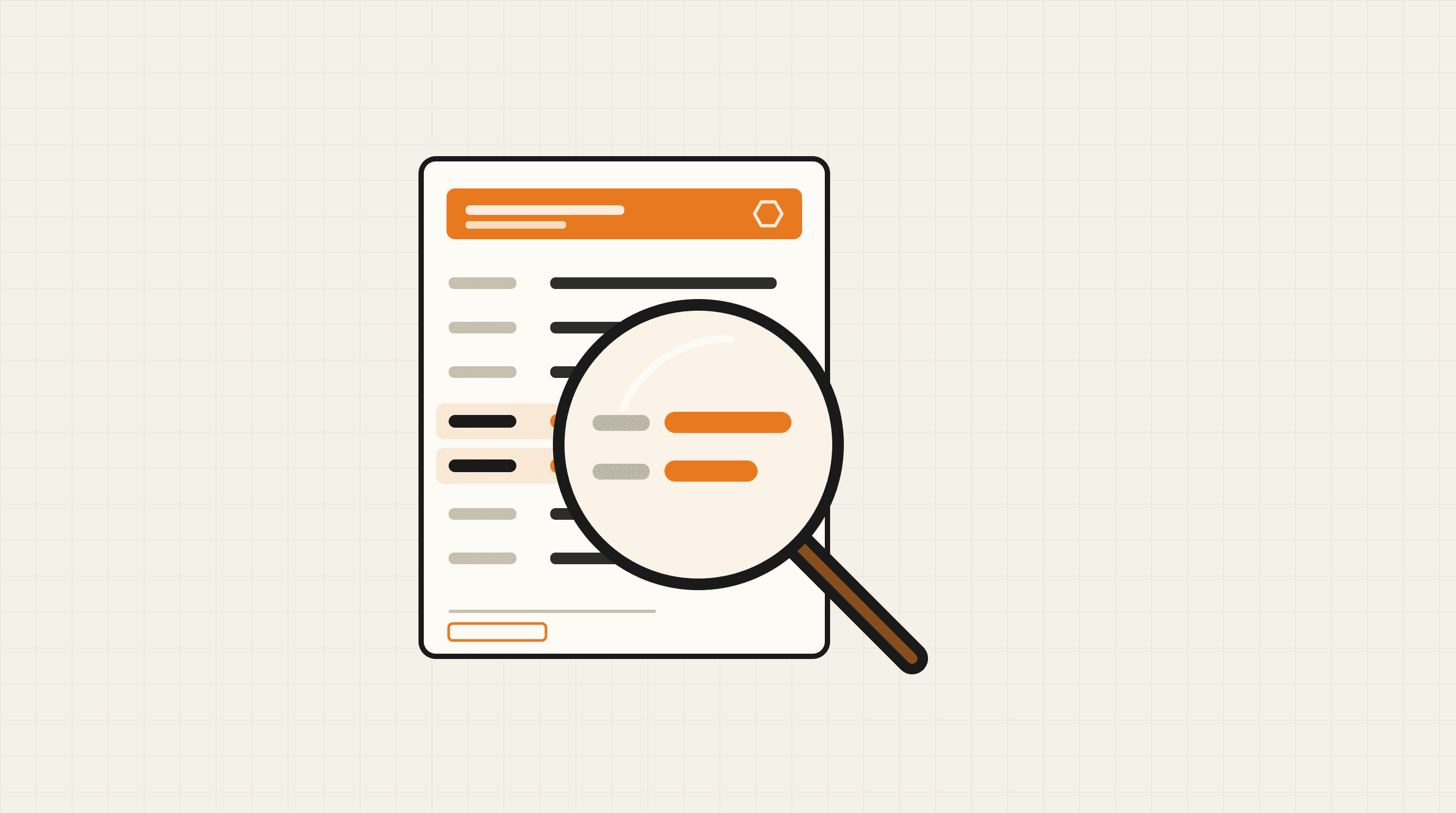
A COA, or Certificate of Analysis, is a lab’s report on what’s actually in a vial. Real and verifiable, it’s the most powerful tool you have in a market with no regulator. Faked or unverifiable, it’s worse than nothing, because it sells you false confidence. Here’s how to read one.
The five things a real COA tells you:
- Identity, is it even the right molecule? A proper test confirms the compound by mass spectrometry. No identity confirmation and purity is meaningless. You could have 99%-pure something else.
- Purity, what percent is actually the peptide? The headline number (you’ll see 99-point-something), measured by HPLC. Higher is better, but it’s only half the story.
- Content, how many milligrams are actually in there? The one that’ll open your eyes. The cap says one number; the COA measures reality, and they often don’t match. Purity tells you how clean it is. Content tells you how much you’re dosing. You need both.
- Method, how was it tested? Look for HPLC and mass spec, usually written LC-MS. (A step up — LC-MS/MS — actually verifies the amino-acid sequence: more thorough, more expensive, and rarer to see.) That’s the real analytical stack.
- Batch and date. A COA is tied to one batch on one date. A report for batch A says nothing about batch B in your hand.
One more layer most people skip: the lab itself. “Verifiable” is the floor; the ceiling is whether the lab is actually accredited. Look for ISO 17025, the international standard for testing competence. A lab can be a community favorite — the name everyone posts — without ever being accredited, and popularity is not the same as a documented, audited process. It doesn’t automatically make an unaccredited lab’s numbers wrong, but an accredited one gives you a real standard to lean on instead of a reputation.
One thing that trips people up: a real COA never reads 100%. Peptides are built one amino acid at a time, and that process naturally produces a mixture of closely related molecules — deletion sequences, oxidation products, and other synthesis byproducts. Even after purification, tiny amounts remain, which is why 98–99%+ purity is considered excellent. A suspiciously perfect “100%” should raise your eyebrow, not settle it. It’s also why purity and content are two different numbers. HPLC purity only counts the peptide-related material, so a powder can read 99% pure and still weigh in under its label, because the rest of the mass is water the freeze-dried powder pulls in plus leftover salts from making and purifying it. Purity tells you what fraction is the right molecule; content tells you how many milligrams are there. That’s why you want both.
The red flags of a fake or useless COA:
- You can’t independently verify it. The big one. A real lab lets you confirm the report on its own site with a code or QR from the document. A screenshot the seller sends is a screenshot, not a test, possibly edited or borrowed from someone else’s batch.
- The batch doesn’t match your vial. A recycled COA, a real report for a different, earlier batch, is one of the most common tricks.
- No lab, no method, no date. If it doesn’t say who tested it, how, and when, it isn’t evidence.
- Suspiciously perfect and nothing else. A lone “100% pure” with no chromatogram, no mass spec, no content number, and no verify path is a marketing claim, not proof.
The gold standard: don’t just read their COA, get your own
A vendor providing a COA is the floor, not the ceiling. Anyone worth your money should have one; if they can’t produce a batch-matched, verifiable COA, that’s your answer, walk away. But remember who commissioned that COA: the seller did. Even a real, verifiable one has a trust gap, because you’re taking their word that the report matches the vial in your hand. The way to close that gap is to stop relying on their test and get an independent one.
Independent third-party testing is the same work the labs behind these reports do: a vial goes in, they run identity, purity, and content, and you get back a report nobody with a stake in the sale ever touched. The catch is cost. An independent test can run more than the vial did. When people happen to have the same batch, some share the cost of a single test rather than each paying full price. Even when a seller’s own COA looks flawless, testing a batch yourself now and then is the most honest signal you’ll ever get about what you’re putting in your body. In a market with no regulator, the only test you can fully trust is the one you commissioned.
How the scams work, and the red flags that give them away
A market that runs on trust with no enforcement gives scammers a lot of room. The good news: the scams rhyme, and once you know the patterns they’re easy to spot.
- With a direct vendor, unsolicited contact is the tell. There’s one rule the community treats as law: a direct gray-market vendor never messages you first. If a “vendor” slides into your DMs or a group chat offering product, it’s a scam. I’ve watched this hold ironclad with direct sources; I can’t vouch for how every social-media reseller runs, but I’d apply the same rule and lose nothing by it.
- Impersonation is the most common robbery. Scammers clone a known name: a lookalike handle, an address off by one character, a “backup account because the main got banned.” Then they take payment and vanish. Confirm you’re talking to who you think you are, and treat any “my other account” story as a red flag by default.
- On-site reviews are marketing, not proof. A glowing review section on a seller’s own page is trivial to fake and usually seeded. Reputation only counts when it comes from somewhere the seller doesn’t control, a community where the people talking have nothing to sell you.
A word on paying, since it worries people: it’s almost always crypto, and that by itself is not a red flag. It’s just how this market moves money. What it does mean is there’s no undo, no chargeback, no platform to appeal to. So the discipline is simple: finish your vetting before you pay, because there’s no after.
The through-line: every scam here works because there’s no referee. The fix isn’t a secret vendor or a magic word. It’s you, running the checks and refusing to skip one.
The 60-second vetting checklist
Before you trust a source or a vial, run these.
The source
- Was this offer unsolicited? (If they messaged first, walk away.)
- Confirmed the handle or address is the real one, not a lookalike?
- Real reputation outside the seller’s own site, somewhere they don’t control?
- Can they produce a batch-matched COA? (No, hard no.)
The COA
- Names the lab, the method (HPLC / mass spec), and a date?
- Can I verify it myself, on the lab’s site, with the code on the document?
- Does the batch on the COA match the batch on my vial?
- Shows identity, purity, and content, not a lone “100%”?
The risk I’m accepting
- Payment is one-way (usually crypto, no chargeback), so is all my vetting done before I pay?
- Have I considered my own independent test, especially on a first order?
- Is the price “too good”? (Cheapest and easiest is usually the trap.)
If you can’t check these, you’re not buying a product, you’re buying a hope. This whole guide is about turning that hope into something you can verify.
This is doable. People do it carefully every day, and if you’re going to, everything above is how you tilt the odds in your favor. The genuinely safest route is still a licensed prescriber and a pharmacy, and past that you’re taking on real risk that’s yours to weigh. What I won’t do is point you toward it: I don’t sell, supply, recommend, or source any of this, and neither does this guide. It’s education on protecting yourself, not medical advice, and none of these compounds are FDA-approved for the uses people discuss. Do the diligence, and bring a doctor into it where you can.
Frequently asked questions
How do I know if my peptides are real?
You verify, you don’t trust. In a market with no regulator, the real proof is a batch-matched Certificate of Analysis (COA) from an independent lab that you can confirm yourself on that lab’s own site, and ideally an independent test you commissioned on your own vial. A seller’s word, a slick brand, or a screenshot is not proof.
What is a COA and how do I read one?
A COA (Certificate of Analysis) is a lab’s report on what is actually in a vial. Read it for five things: identity (is it confirmed as the right molecule by mass spectrometry), purity (what percent is actually the peptide, by HPLC), content (how many milligrams are truly in the vial, which the label often overstates or understates), method (HPLC and mass spec), and the batch and date (a COA only speaks for one batch on one date). Then verify it yourself on the lab’s site for your exact batch.
Why is a peptide COA never 100% pure?
Because peptides are assembled one amino acid at a time, and that process always leaves a few closely-related cousins behind — chains missing a residue, or slightly modified versions — that are too similar to fully separate out, even after purification. Longer peptides accumulate more of them. So 98 to 99-point-something is what a clean research peptide looks like; a perfect "100%" is a reason for suspicion, not comfort. It is also why purity and content differ: HPLC purity only counts peptide-related material, so a 99%-pure powder can still weigh in under its label once you account for absorbed water and leftover salts from making and purifying it.
Does the milligram number on the label match what’s in the vial?
Often it does not. The number on the cap is a claim; a real content test measures reality, and the two can differ in either direction. Purity tells you how clean it is; content tells you how much you are dosing. You need both, which is why a COA that shows purity but not measured content is only half the picture.
How do I avoid getting scammed buying peptides?
Learn the patterns. With a direct vendor, unsolicited contact is the tell — a real one never messages you first, so an offer that slides into your DMs or a group chat is a scam. Impersonation with lookalike handles is the most common robbery, so confirm you are dealing with who you think you are. Treat glowing reviews on a seller’s own page as marketing, not proof. And remember payment is usually one-way (crypto, no chargeback), so all your vetting has to happen before you pay.
Are gray-market peptides safe?
There is no regulator standing behind them, so the burden of verifying identity, purity, sterility, and dose is on you. That does not make it impossible to do carefully — plenty of people do — but it makes diligence non-negotiable. The safest route is still a licensed prescriber and a pharmacy, and none of these compounds are FDA-approved for the uses people discuss.
Sources
- What a certificate of analysis can and cannot establish. Identity and purity by HPLC or mass spectrometry answer “is this the right molecule and how much else is in it,” and nothing more. Sterility, endotoxin and the actual contents of the vial in your hand are separate questions a purity chromatogram does not touch, which is the single most misread thing in this space.
- Why a report has to be tied to a batch and a date. A COA describes one batch tested on one day. Reused across later batches it establishes nothing about the one you received, and that reuse is common enough to be the first thing worth checking.
- Fabricated evidence is a documented problem here, not a hypothetical. While researching the growth hormone post I found four peptide studies in circulation that do not exist, two of them quoting an identical fabricated result. And when I went looking for stability data for BPC-157, every figure available came from sellers and they contradicted each other. Treat vendor-published evidence as marketing until it is independently verifiable.
- Not covered here, deliberately: where to buy anything, or which sellers are trustworthy. This page is about how to read what you are shown, which is a different question and the only one worth answering in public.
Educational information only, not medical, legal, or financial advice. Nothing here endorses, supplies, or facilitates the acquisition of any substance. The compounds discussed are not FDA-approved for human use. Any decision belongs with a qualified physician.

Written by
Jason Jeffries
Founder of Stackeddd. Data analytics by day (12 yrs), training for 20, juggling a full-time job, family, and app development. I run TRT and peptides myself, and I built Stackeddd because my whole tracking system was a notebook in a drawer in my bathroom. I’m not a doctor and none of this is medical advice.
STACKEDDD
Track it instead of guessing.
Doses, bloodwork, and an AI coach grounded in your own data — free to start, on the App Store and Google Play.