Is More Testosterone Actually Better?
I’m on a dose that’s working, and I always planned to go up. Then my bloodwork asked a question I’d never actually answered: is more testosterone even better?
By Jason Jeffries · July 23, 2026
I started testosterone on March 30th, 2026. 150mg a week, split between Monday and Thursday. It’s now late July, so call it four months in.
I’ll tell you exactly what it’s done, because it’s the reason this post exists. My confidence is way up. My recovery is incredible, my performance in the gym is the best it’s been. My libido climbed. My energy is a little better, my sleep about the same. But the biggest change is the one I didn’t see coming: my whole outlook shifted. I didn’t know how apathetic I’d been until it lifted, and now I feel joy more often. That’s not a small thing to get back.
So here’s the honest setup. From the day I started, my plan was to raise the dose over time. It worked so well that I wanted to raise it sooner.
My logic was simple, and I don’t think it’s dumb. I’m in a cut, trying to get down to single-digit body fat and then see how much muscle I can build. More testosterone helps you hold and even gain muscle in a calorie deficit. So more of it should mean I look bigger, get stronger, and protect what I’ve built while the fat comes off. If 150 did all of that, 250 has to be better.
That “has to be” is the whole reason I stopped to write this.
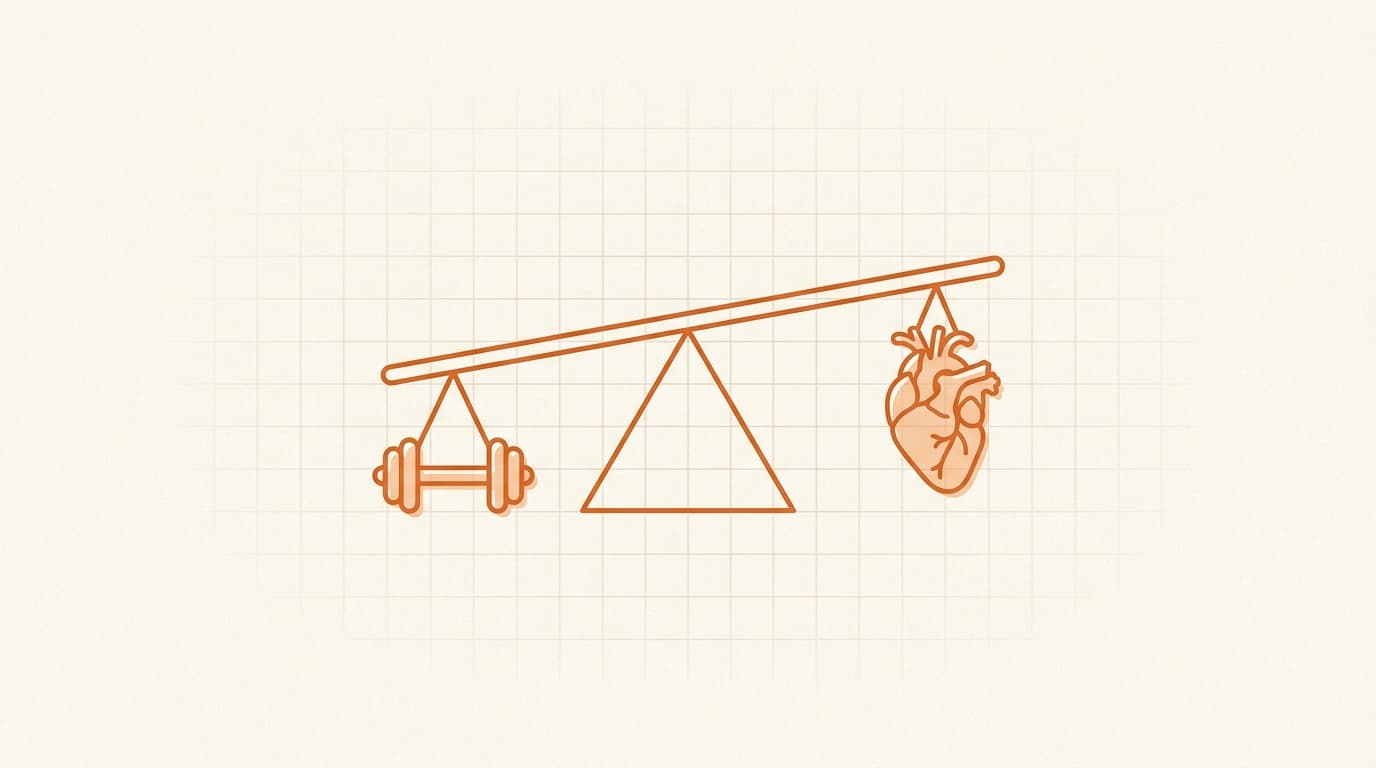
More testosterone does build more muscle. That part is real, and I’m not going to pretend otherwise. But the muscle you get for each extra milligram shrinks as you climb, while the side-effect markers keep moving the wrong way and don’t. So “more is better” is true right up until it quietly isn’t. The honest question isn’t “is more better.” It’s better at what, and at what cost.
The bloodwork that made me pause
I got routine bloodwork. I wasn’t chasing a problem, I just wanted to see where I was. Here’s what came back:
Total testosterone 1277. Free testosterone 238.8. LDL 104. HDL 48. Estradiol 66, on a sensitive (LC-MS) assay, which is the accurate one and not the inflated kind.
That panel isn’t wrecked. My lipids are fine. My testosterone is exactly where you’d expect on my dose. But my estradiol is sitting at roughly double the top of the range, and here’s the part that stuck with me: I feel nothing. No symptoms. If I hadn’t drawn blood, I’d have no idea that number was high, because everything the estrogen could be doing wrong, it isn’t doing in a way I can feel.
That’s the trap I almost walked into. I feel incredible, so more must be fine. But “I feel great” and “my markers are fine” turned out to be two different sentences. One of my numbers was already out of range at the dose that’s working, and I couldn’t feel it. Which made me stop and actually ask the question sitting underneath my entire plan, the one I’d never bothered to check: is more testosterone even better?
Does more test actually build more muscle? Yes, but on a curve
There’s one clean study people always come back to, and for good reason. Researchers took healthy young men, shut off their natural testosterone production so they controlled every variable, then gave them fixed weekly doses ranging from 25mg all the way up to 600mg for 20 weeks. Same standardized food, no training allowed to muddy it. The result was a clean dose-response: more testosterone, more muscle, straight up the line. So if anyone tells you more doesn’t do more, they’re wrong. It does.
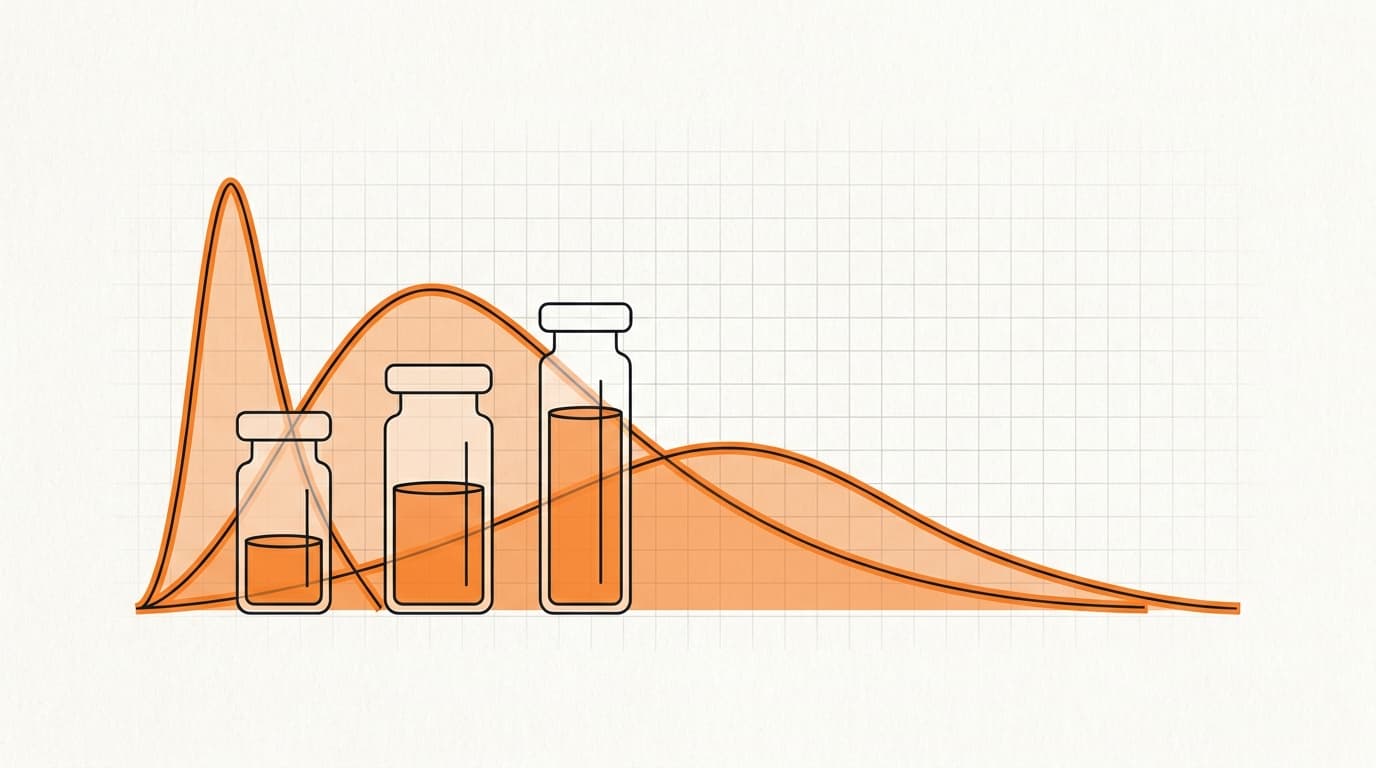
But the shape of that line is what matters, and it rarely survives the retelling. The muscle gain tracked the logarithm of your testosterone level, not the raw milligrams. In plain terms: at the low end, each extra milligram bought you a lot of muscle. At the high end, each extra milligram bought you much less. Run the numbers from that study and you were getting roughly twice as much muscle per milligram at the bottom of the range as you were at the top.
So going up isn’t free money. It works, but you pay more and more milligrams for less and less muscle the higher you climb. That’s the first half of the trade.
The risk side doesn’t flatten
Here’s the asymmetry that reframed the whole thing for me. The muscle curve flattens out as you go up. The side-effect curves don’t.
In that same controlled study, HDL, your “good” cholesterol, dropped as the dose rose, and it kept dropping. I want to be careful here, because it cuts both ways: a falling HDL is a marker moving, and low HDL on its own is a debated risk signal, not proof of damage. But the direction is real and it didn’t level off the way the muscle did.
Hematocrit is the one I pay the most attention to, because it’s the one that can actually hurt you now, not decades from now. It’s how thick your blood is, and testosterone drives it up. Too high and you’re into clot and stroke territory. That’s not a number on a page, that’s a real risk. Mine read 52 on my first draw, which spooked me, then 48 on a later one. I’ll be honest about that though: hematocrit is a slow-moving marker, and a four-point difference between two blood draws is just as likely to be hydration or normal lab variation as anything I did. The point that holds is that it moves with your dose, and it’s the dangerous one.
And estradiol. Mine’s already 66 at 150mg. More testosterone means more raw material for your body to convert into estrogen. Go up on the dose, and that number goes up with it.
So look at the actual trade of going from 150 to 250. I’d be buying a slice of muscle I might not even be able to see, and paying for it with an estradiol that’s already high, a hematocrit that only moves one direction, and an HDL that keeps sliding. At 150 I’m buying near the good part of the muscle curve. At 250 I’d be paying more per milligram for the muscle and more of every side effect. The exchange rate gets worse in both directions at once.
So how do they run 500 or more without an AI or blood pressure meds?
This is the question that really got under my skin. If I’m at 66 on 150mg, how is the guy on 500 or 700 not fighting his estrogen with an aromatase inhibitor and his blood pressure with medication? What’s actually different about his body and mine?
Three things, and only the first is really about his body.
Start with the estrogen, since that’s the one I’m dealing with. The enzyme that turns testosterone into estrogen lives mostly in your body fat, so a leaner guy converts less of his dose than I do. On top of that it’s partly genetic. In a big family study, estradiol was about 30% heritable, and there are gene variants that make some men high converters and some low at the very same body fat. So a lean guy with low-converting genetics can genuinely run more testosterone before his estrogen climbs enough that he’d reach for an AI. My 66 at 150 says I’m on the higher-converting end of that. That part is real.
But blood pressure is a separate story, and this is where the common assumption is just wrong. On testosterone, what actually pushes blood pressure up is mostly two things, and neither of them is your estrogen: your hematocrit, how thick your blood gets, and testosterone itself telling your kidneys to hold onto sodium and water. Estrogen gets blamed for the bloat, but in men it’s mostly the testosterone doing that, not the estrogen it converts into. That’s why blocking estrogen with an AI doesn’t actually bring your blood pressure down. So “doesn’t need an AI” and “doesn’t need blood pressure meds” are two different questions with two different answers. Being a lucky low-converter can spare you the first. It does nothing for the second, because how much your blood pressure climbs comes down to how much your hematocrit rises and how your body handles the fluid, and that varies from person to person by baseline, dose, how lean you are, and things like sleep apnea. Some men really do barely change. Others rise into hypertension on the same dose.
But here’s the part that reframed it for me. “Doesn’t need an AI” and “doesn’t need blood pressure meds” usually mean “never checked.” Only about a third of guys using ever see a doctor or get bloodwork at all, and most never tell their doctor they use. When researchers followed 100 regular, un-cherry-picked users at a median of about 900mg a week for a year, nearly all of them got the exact shifts I’m worried about: HDL down, LDL up, blood pressure up about 7 over 3 points on average, hematocrit up with about a third crossing above the normal range, measurable drops in heart function, and their natural testosterone shut down across the board. Not needing an aromatase inhibitor and running a high estrogen you’ve simply never measured look identical from the outside. Not needing blood pressure meds and having a creeping blood pressure nobody’s ever taken look identical too. The guys who got hurt aren’t the ones posting shirtless. You’re seeing the survivors and calling it the average.
And the last piece: “fine” usually just means “inside a wide range,” and the community actively normalizes numbers that aren’t. The standard advice for a hematocrit of 54 isn’t “something’s wrong,” it’s “go donate blood.” In-range isn’t optimal, and no-symptoms-yet isn’t no-cost. I’m proof of that last one. My 66 has no symptoms attached and it’s still double where it should be.
And there’s a catch even for the guy who does test. Past about 600mg a week there’s no controlled study of testosterone at all, so the whole 500-and-up crowd is running on guesses. When researchers actually imaged the hearts of long-term high-dose users, they found lower heart-pumping function and more coronary plaque, and none of that shows up on a blood panel. So even the guy who posted a clean panel wasn’t really cleared. He measured the easy things. A clean blood test isn’t a clean bill of health. It’s a clean blood test.
Will leaning out lower my estrogen?
One thing I genuinely wondered, since I’m mid-cut. The enzyme that makes estrogen lives in fat. So will just getting lean drop my estradiol on its own, no other changes?
Probably it helps some. My dose is fixed, so less body fat means less of that enzyme around to convert it, and heavier guys on testosterone therapy do tend to run higher estrogen. But I’m not banking on it fixing a 66. The cleanest experiment on weight loss and estrogen barely moved the number when nothing else changed. So my plan is: lean out, re-test on the same assay, and adjust from what I actually see, not from what I assume. That’s the whole theme of this, really. Measure it, don’t guess at it.
The free levers come first
There’s a question I have to answer honestly before “should I take more” is even a fair one to ask: have I actually maxed out the stuff that’s free?
Because testosterone is the expensive lever, and the risky one. Training, nutrition, and sleep cost nothing, they carry no side effects, and they move the exact things I want more testosterone for in the first place: muscle, strength, recovery. Training is the signal that tells your body to keep and build muscle. Food, and protein especially, eaten for the goal I’m actually chasing, is the raw material. Sleep is where the recovery I’m so happy about actually gets built, and it’s the one I’ve shortchanged the most. My recovery has been incredible, but my sleep has barely moved since I started, so that’s the lever with the most room left in it.
None of that shows up in a syringe. And until all three are dialed, “should I add more testosterone” isn’t really a training question, it’s a shortcut question. Pull the free levers first. Then, if you’re still coming up short, at least it’s an honest ask.
Does more even point at your goal?
Say you’ve maxed the free stuff and it’s still a fair question. The honest next step is to get clear on what you’re actually chasing, because more testosterone points toward some goals and straight away from others. This isn’t a yes or no on your dose — that’s between you and your prescriber. It’s a gut check on whether more even moves the thing you care about.
| Your goal | Does more test move it? | The catch | Do this first |
|---|---|---|---|
| Size / mass | Yes — real dose-response | Diminishing per mg; estradiol, hematocrit, and cholesterol climb | Max food and training; know your labs |
| Strength | Yes — rose with dose in the trials | Mostly programming and recovery too, not just dose | Dial your programming and sleep |
| Lean / aesthetic | No — leanness is the cut, not the dose | Adds mass and some water, not definition | Tighten the deficit |
| Health / longevity | No — wrong direction | Every health marker moves against you | You’re likely already at or above optimal |
Look at the bottom two rows. For the two most common goals after size and strength — leaning out and staying healthy — more testosterone doesn’t serve the goal at all. It adds size and some water, and it drags every health marker the wrong way. So before “should I go up” is even the right question, the better one is “up toward what.” If the honest answer is size or strength, more does something — on the flattening curve and the rising cost we already walked through. If it’s getting lean or staying healthy, the dose isn’t your lever.
So is it worth it?
Back to where I started. Is more testosterone better?
More does more. It’s undeniable. But for every extra milligram the muscle you buy shrinks while the risks climb, and the doses people actually chase have never been studied for the things that matter most, which turn out to be things a blood test can’t even see.
Is it worth it? That’s the part only I can answer, and honestly I haven’t fully. What changed is that I stopped treating “it’s working, so more has to be better” as a fact. My 150 is doing everything I listed at the top, the confidence, the recovery, the gym, the joy. The 250 version of me buys a little more muscle I might not even see, and pays for it with an estradiol that’s already high, a hematocrit that only goes one way, and a stack of question marks nobody has ever measured.
For now, I’m staying at 150. Not because more never works, but because “better” turned out to be a real question with a real cost, and I’d rather answer it with my own bloodwork over time than with somebody else’s highlight reel.
If you’re on testosterone and thinking the same thing I was, the move isn’t to trust a number in a range or a physique on a screen. It’s to draw your own blood, watch your own trend, and take the dose question to someone who can see all of it with you. That’s what I’m doing.
One blood draw is a snapshot; the story is in the trend. Log your labs and doses and watch your own estradiol, hematocrit, and HDL move over time in Stackeddd — free to start. You can model your own levels in the Blood-Level Simulator, and see what your numbers do on different injection schedules before you change anything.
Frequently asked questions
Should I increase my testosterone dose?
That is a decision for you and your prescriber, not something a blog can answer. But a useful gut check is to name your goal first. More testosterone adds size and strength, though on a flattening per-milligram curve and with rising estradiol, hematocrit, and cholesterol. It does not make you leaner — that is the calorie deficit and diet. And for health it moves every marker the wrong way. Before it is even a question, make sure you have maxed training, nutrition, and sleep, and that you actually know your current bloodwork.
Does more testosterone build more muscle?
Yes. In the cleanest controlled study, weekly doses from 25mg up to 600mg produced a straight dose-response — more testosterone, more muscle. But the gain tracks the logarithm of your testosterone level, not the raw milligrams, so each extra milligram buys less muscle the higher you climb. You get roughly twice as much muscle per milligram at the low end of the range as at the top. So more does do more, but on a flattening curve.
Is a higher testosterone dose better?
It depends what you mean by better. More does build more muscle, but the return per milligram shrinks while the side-effect markers — estradiol, hematocrit, HDL — keep moving the wrong way and do not flatten. So the honest question is not "is more better," it is "better at what, and at what cost." And past about 600mg a week there is no controlled study of testosterone at all, so the doses people actually chase are unmeasured.
Why is my estradiol high on TRT even with no symptoms?
Testosterone converts to estrogen through an enzyme (aromatase) that lives mostly in body fat, so more testosterone and more body fat both raise estradiol. You often cannot feel a high number — plenty of men sit well above range with zero symptoms. "No symptoms" is not the same as "in range," and "in range" is not the same as optimal. Use an ultrasensitive (LC-MS) estradiol test, since standard immunoassays read falsely high in men.
Will losing body fat lower my estrogen on testosterone?
Probably somewhat. Because the enzyme that makes estrogen lives in fat and your dose is fixed, carrying less fat means less conversion, and men on testosterone with more body fat do tend to run higher estradiol. But do not count on it fixing a high number by itself — the cleanest weight-loss study barely moved estradiol on its own. Lean out, re-test on the same assay, and adjust from what you actually see.
How do some men run 500mg+ of testosterone without an aromatase inhibitor or blood pressure meds?
Partly real biology — leaner, lower-aromatizing men convert less testosterone to estrogen and can run more before they would need an AI, and the hematocrit response varies between people. But mostly it is that they never checked: only about a third of users get bloodwork at all, and when 100 unselected users were followed at a median of about 900mg a week for a year, nearly all had worse lipids, higher blood pressure, and rising hematocrit. You are seeing the survivors who post, not the average.
Does an aromatase inhibitor lower blood pressure?
No. In men, blood pressure on testosterone is driven mostly by rising hematocrit (thicker blood) and by testosterone itself making the kidneys hold onto sodium and water — not by estrogen. Estrogen even looks vascular-protective in men. Blocking it with an aromatase inhibitor lowers estradiol but does not bring blood pressure down, so "control your estrogen to control your blood pressure" is a myth in men.
Sources
- The dose-response shape is the well-established part. More testosterone does build more muscle, and it does so on a flattening curve rather than a straight line, which is the entire point of the question. What flattens is the benefit; what does not flatten is the set of things that keep climbing alongside it.
- Erythrocytosis is on the label, not merely in community lore, which is why haematocrit is the marker I watch first. Depo-Testosterone label.
- My own bloodwork is a sample of one, on one protocol, at one point in time. It is what prompted the question and it does not settle it for anyone else.
- The honest limit of this post: the risks that do not show up on a blood panel are the ones I cannot quantify for you, and neither can anyone else with a chart. That is an argument for caution rather than a number.
This is my own experience and general education, not medical advice. It is not a recommendation to start, increase, or change a testosterone dose or to use any compound. Everyone’s physiology, labs, and risks are different. Talk to a qualified medical provider about your own bloodwork and any change to a medication, dose, or protocol.

Written by
Jason Jeffries
Founder of Stackeddd. Data analytics by day (12 yrs), training for 20, juggling a full-time job, family, and app development. I run TRT and peptides myself, and I built Stackeddd because my whole tracking system was a notebook in a drawer in my bathroom. I’m not a doctor and none of this is medical advice.
STACKEDDD
Track it instead of guessing.
Doses, bloodwork, and an AI coach grounded in your own data — free to start, on the App Store and Google Play.