I Built an AI Coach. Here’s Why It Should Never Replace the Human in the Loop.
I built an app with an AI coach inside it — so this might sound strange coming from me: don’t let it replace the human in your corner. Doctor, coach, trainer, nutritionist — AI belongs next to them, never instead of them.
By Jason Jeffries · July 8, 2026
The one line I’ll stake my name on
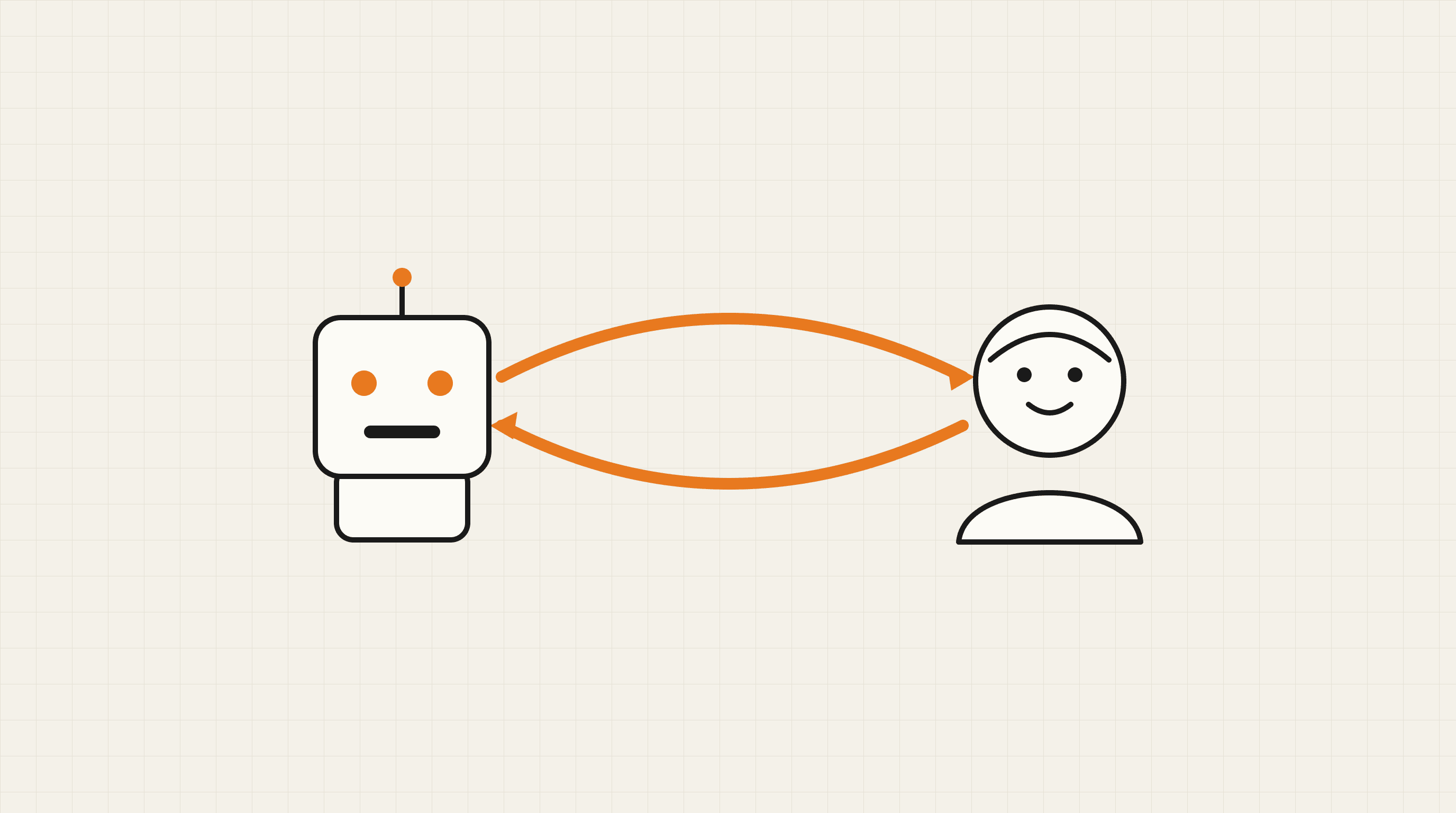
Let me say it plainly, because the whole industry is getting cute about it: anyone telling you that AI can replace the human in the loop either doesn’t understand AI, or is lying to you.
I don’t say that as a skeptic. I say it as someone who works in data science and analytics — I’ve built and worked on automated systems, and the one thing every single one of them has in common is a human in the loop. Not because the machine is dumb. Because that’s the point where the machine is safe.
Can AI replace your doctor or coach? No. AI is a supplement — genuinely useful for understanding your data, spotting trends, and prepping for a visit, but it can’t examine you, be held accountable, or carry a real expert’s judgment. Use it to show up sharper to a human, never instead of one. Anyone selling an app as a replacement is misleading you.
Where AI genuinely earns its place
Here’s what people miss when they hear “don’t trust AI”: AI is incredible when you use it right. It runs on context. Give it the right context — your goals, your data, your history — and it hands back genuinely good information. That’s the whole reason I built Stackeddd’s coach on your logged data instead of making it a generic chatbot.
Here’s an actual conversation I had with it. I woke up spooked by the scale:
That’s the good version. It pulled my actual logged days, did the glycogen-and-water math, knew I’m on TRT and HGH, zoomed out to the 30-day trend that actually matters, and talked me off the ledge instead of pushing a crash day. A generic chatbot can’t do any of that — it doesn’t have my data. That’s what “runs on context” means.
Beyond that, here’s the rest of what I use it for:
- Prep for a human — turn my logged data and open questions into a tight list I bring to my doctor or coach, so the session counts.
- Understand my numbers before an expert sees them — so I show up able to ask sharp questions instead of nodding along.
- Surface trends I’d never eyeball— “your hematocrit has crept up across your last three draws.”
- The lookup stuff — half-life, a compound’s makeup, dosing and macro math.
- The 2am question I don’t want to ask a person.
Every one of those makes me sharper walking into the room. None of them replace the expert. They get me ready for the expert.
Where AI hits a wall — two stories from my own bloodwork
My estradiol came back sky-high once. I let a large language model look at it, and it confidently told me why it was high and what to do about it. I sent the same panel to a buddy of mine — one glance: “That’s the wrong test. You need the ultra-sensitive estradiol.” The standard assay reads falsely high in men; the number the AI was busy analyzing was garbage. It wasn’t a little wrong — it was confidently solving the wrong problem, because it took the number at face value. A human who’d seen that a hundred times caught it in a sentence.
The second one really landed. I heard someone I respect talking about people on retatrutide coming back with low ferritin from micronutrient deficiencies. Then I got my own labs — low ferritin, eight months on reta. Here’s the thing: the real-world data on this isn’t published yet. Reta isn’t FDA-approved, and the specific pattern — what people actually run into months in — hasn’t been written up. A model might generalize a vague risk from the drug class it belongs to, sure. But knowing to look for it in your labs, before the literature catches up? That lives in one place — the head of someone who’s personally reviewed thousands of labs from people doing what you’re doing. At the frontier, the human isn’t a nice-to-have. They’re the one who gets therefirst.
And this isn’t just a bloodwork thing — it’s every corner of this industry. A strength coach watching your bar path catches the breakdown a rep-counter never will. A physio’s hands find what your movement app can’t see. A nutritionist reads the life behind your macros. Same pattern everywhere: AI sees the number, the human sees you.
What only a human can do
A coach, trainer, or physician who’s been in the trenches for years — read tens of thousands of labs, watched thousands of athletes move, walked hundreds of people through the exact thing you’re facing — carries institutional knowledge the literature hasn’t caught up to yet. That’s hard-won expertise you can’t download. They know you — your goals, your weak spots, whether you need pushing today or need to be left alone. And they can be held accountable. AI has no skin in the game; it will never lose sleep over your hematocrit or your torn-up knee. That’s not a knock on the tool. It’s the definition of a tool.
“But I can’t afford a coach” — the honest part
Here’s the objection I take seriously, because it’s my story. I couldn’t afford the men’s-health clinics — a couple hundred a month for TRT, coaching, and labs bundled together was out of reach. So I unbundled it: found TRT far cheaper on its own, get my bloodwork from dirt-cheap à-la-carte labs (here’s how I actually track the results once they come in), and my regular primary care physician reads the results. Same expert reading my numbers, a fraction of the price.
And it generalizes: your human doesn’t have to be a $300-a-month coach. It can be the doctor you already have, a trainer at your gym, a knowledgeable friend. In my estradiol story, the person who saved me wasn’t a paid coach — it was a buddy. (If you’re weighing the bundled route, here’s how the clinics actually compare.)
To the people in this industry scared of AI
I know a lot of people in fitness and healthcare are genuinely worried AI is coming for their jobs — and that fear is real, I’m not going to pretend it isn’t. But here’s my honest take: if a chatbot can do your whole job, the problem was never the chatbot. The best coaches, trainers, nutritionists, and physicians I’ve worked with aren’t threatened by a lookup tool, because what they do isn’t lookup. It’s judgment, accountability, and knowing you. I pay them gladly.
Where I land
I pay the human premium. I pay for real coaches and real doctors, and I’d tell you to keep an expert in your corner too. And that’s coming from the guy who built an app you can use for $9.99 a month. (If you’re comparing trackers, here’s an honest, fact-checked look at how it stacks up against the competition.)
I didn’t build it to replace your doctor, your coach, your trainer, your nutritionist, your physical therapist — any of the real experts who make this industry worth being in. I built it to make you the sharpest version of yourself when you walk in to work with one. Use it exactly that way.
Frequently asked questions
Can an AI coach replace my doctor or trainer?
No. AI is a supplement to a human expert, never a substitute. It is genuinely useful for understanding your data, spotting trends, and prepping for a visit — but it cannot examine you, be held accountable, or carry the hard-won judgment of a coach or physician who has worked with thousands of people. Use it to show up sharper to a real expert, not instead of one.
How should I use an AI health or fitness coach?
As a supplement. Feed it context — your goals, your logged data, your history — and use it to understand your numbers, surface trends you would miss, prep questions for your doctor or coach, and handle quick lookups. Then take any real decision to a human.
Isn’t it contradictory to build an AI coach and say this?
No. I built the coach as a tool that makes you a sharper client for a real expert, not as a replacement for one. The best version of AI in health and fitness keeps a human in the loop. Anyone selling an app as a replacement for your provider or coach either does not understand AI or is not being honest.
Why does AI struggle with things like TRT and newer peptides?
Because a lot of the real-world knowledge is not in the published literature yet. Compounds like retatrutide are not FDA-approved, so the long-term, real-world data — the patterns people actually run into off-label — is not something a model has been trained on. Those patterns live with experienced humans who have reviewed thousands of labs, often well before the studies catch up.
Do I need an expensive coach to do this safely?
No. You can unbundle it: get your labs à la carte, and have the doctor you already have — or a knowledgeable friend — read them. The human in your corner does not have to be a premium coaching package. It just has to be a real human with judgment.
Is my data private with Stackeddd?
Yes. Your data lives on your phone. There are no accounts and no analytics, and the developer cannot see what you log.
A note on what this is
This one is an argument rather than a research summary, so there is no reference list to give and pretending otherwise would be dressing. What it rests on instead:
- I have an obvious interest here. I build an app with an AI coach in it, and I am telling you that it should not replace your doctor. That is the position, and it is also commercially inconvenient enough that you can weigh it accordingly.
- The concrete claims are checkable elsewhere on this site. That an AI will produce confident and wrong numbers in this domain is not speculation: a user was given a fabricated potency figure by a general-purpose model and changed his protocol on it, and four non-existent peptide studies turned up in circulation while researching the growth hormone post. Those are the failure modes this post is about.
- What I do not claim: that any AI, including mine, is reliable enough to act on unreviewed. The argument is that grounding a model in your own logged data narrows what it can get wrong, not that it eliminates it.
Educational information only, not medical advice. Nothing here diagnoses, treats, or prescribes. Decisions about your health, training, and any protocol belong with a qualified professional.

Written by
Jason Jeffries
Founder of Stackeddd. Data analytics by day (12 yrs), training for 20, juggling a full-time job, family, and app development. I run TRT and peptides myself, and I built Stackeddd because my whole tracking system was a notebook in a drawer in my bathroom. I’m not a doctor and none of this is medical advice.
STACKEDDD
Track it instead of guessing.
Doses, bloodwork, and an AI coach grounded in your own data — free to start, on the App Store and Google Play.