The Best TRT & Peptide Tracking Apps in 2026
I built one of these apps, so take this with that bias in mind, but here is an honest, fact-checked look at five real competitors, what each one does, and exactly where Stackeddd fits and where it doesn't.
By Jason Jeffries · July 21, 2026
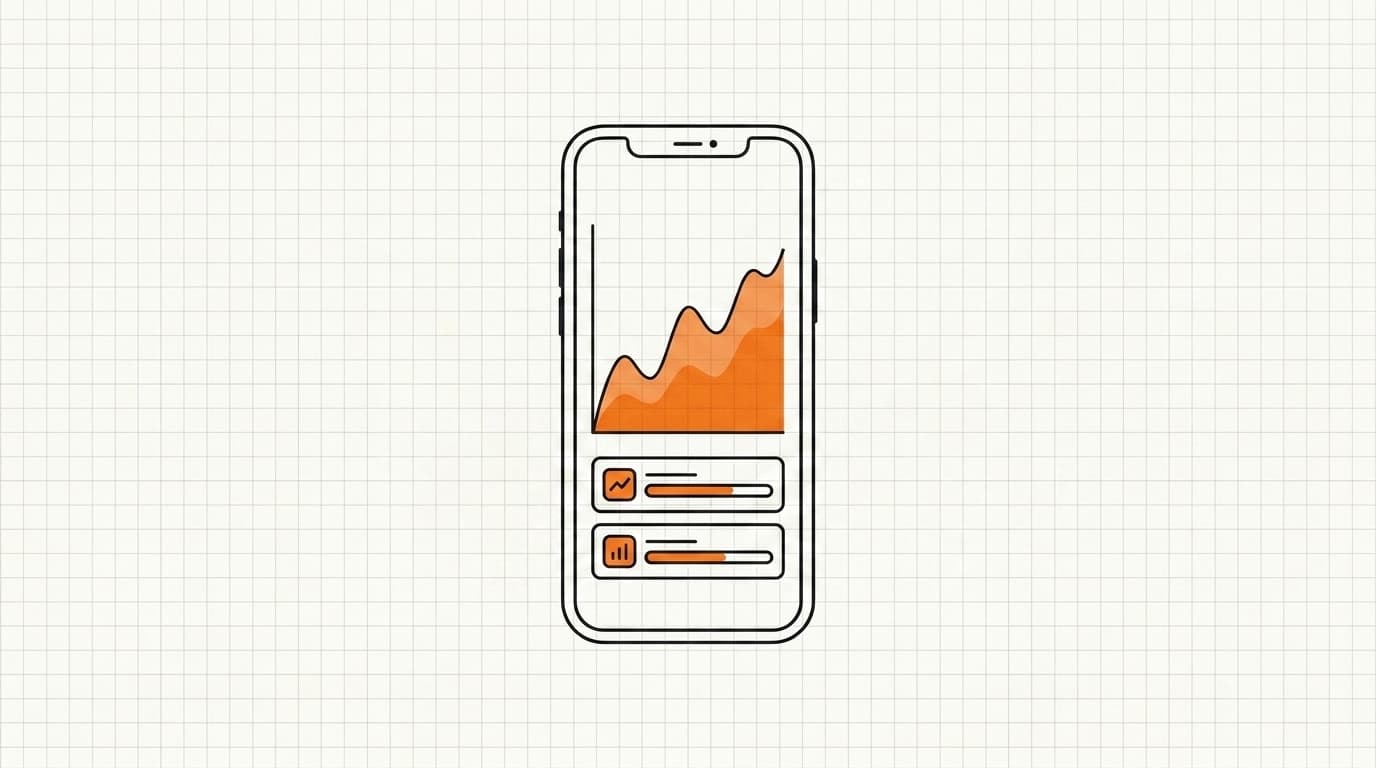
I built Stackeddd because I wanted one app that tracked everything I actually needed, for me: my inventory (what I’m taking, how much I have left), injection sites, and reminders for my shots, without paying around $9 a month for the privilege, which is what most of the other apps in this category charge for just the basics. So yes, I have a bias writing this list. Here’s the honest version anyway.
Judge a peptide or TRT tracker on four things: does it model blood levels, is the AI (if it has one) grounded in your own logged data instead of generic answers, is core tracking free or paywalled, and what does it do with your data. Among real competitors, Pep AI and PeptidePal have the deepest track record by review volume, and Injectly stands out for pairing genuine privacy with its own blood-level projections. Stackeddd's honest edge is free core tracking with no account, plus an AI coach tested with an automated eval suite before every update, not being the single most-reviewed app in the category yet.
What actually matters in a peptide or TRT tracker
Most of these apps look similar in a screenshot: a calendar, a compound list, a chat bubble labeled “AI.” The differences that matter show up after a few weeks of real use:
- Blood-level modeling. Does it show a real pharmacokinetic curve (peak, trough, the shape between doses) or just a static list of what you logged?
- Compound-grounded AI, not a generic wrapper. Is the assistant reading your actual logged doses and labs, or answering from general web knowledge with your data bolted on as context?
- What's free vs. paywalled. Some trackers put basic logging behind a subscription. Calculators and tracking are safety tools, not premium conveniences.
- Privacy. Is your health data linked to your identity, sold, or used for cross-app tracking? Check the App Store privacy label, not just the marketing copy.
Five real apps, compared
Here is what five current, real competitors offer, pulled from their App Store listings today. Ratings and review counts are a snapshot. Check the current listing before deciding.
| App | Rating* | Price model | Blood-level modeling | Grounded AI | Core tracking free? |
|---|---|---|---|---|---|
| Pep AI: Peptide GLP-1 Tracker | 4.7★ (~1,976) | Free to download; a paid subscription is required to access tracking features | No | Not described in the current listing | No — tracking is paywalled |
| PeptidePal | 4.7★ (~1,840) | Free | No | Yes — described as an educational AI advisor | Yes |
| Regimen: Peptide Tracker | 4.9★ (~181) | Free to try one compound; Pro is $4.99/mo or $39.99/yr | No | Not described in the current listing | Partial — one compound free, Pro unlocks the rest |
| Peptide Tracker | 4.9★ (~415) | Free | No — has a half-life estimate calculator, not a modeled blood-level curve | No AI layer described | Yes |
| Injectly | 4.9★ (~262) | Free — no ads, no login, no subscription, no data collection | Yes — an "Insights" dashboard projects serum concentration from logged doses | No — the Insights dashboard is calculation-based, not an AI chat | Yes |
| Stackeddd | 5.0★ (23) — too few to compare fairly | Free core; Pro is $9.99/mo or $59.99/yr (see pricing) | Yes — a real PK blood-level chart | Yes (Pro) — grounded in your own logged data, tested with an automated eval suite before every update | Yes |
Method, and the obvious conflict
- One of these apps is mine. That is stated above and it is worth repeating here, because a roundup written by a competitor is exactly the kind of source this site tells you to be suspicious of. Read it as an informed and interested account, not a neutral survey.
- Ratings and review counts are a snapshot taken from each app's store listing on the date of writing. They move, and a small app's average can swing on a handful of reviews, so treat them as a rough signal rather than a ranking.
- Feature comparisons come from using the apps and from their own store listings. Where a feature exists but is buried, a roundup will tend to miss it: that has happened to Stackeddd, where a third-party comparison marked injection-site rotation as absent when it has been built the whole time. The same error is possible in the other direction here.
- No money changes hands. There are no affiliate links and no paid placements on this page.
* Ratings and review counts are point-in-time, as of writing. Check each app's current App Store listing before deciding.
The five apps, one at a time
Pep AI: Peptide GLP-1 Tracker (Zode Development)
The biggest app in this category by review volume, and it plays like an all-in-one organizer: inventory with vial photos, a reconstitution calculator, an injection-site body map, and side-effect logging across 15+ symptoms tied back to specific doses, plus hydration tracking. Best for someone who wants inventory, injection sites, and side effects managed in one place. Honest caveat: it’s free to download, but you need a subscription to use the tracking features, and there’s no blood-level or PK curve described in the current listing.
PeptidePal (Blank Labs)
Spans GLP-1s, research peptides, and TRT in one app, with a reconstitution calculator that shows a live syringe illustration, a flexible protocol builder (mcg/mg/IU/mL, custom cadences), and a 50+ compound library covering mechanism, half-life, dosing ranges, and side effects. Best for someone who wants breadth across compound categories plus a built-in reference library. It describes its AI as an “educational advisor that respects medical boundaries,” worth checking exactly what that means in practice, as with any AI health feature, before leaning on it.
Regimen: Peptide Tracker (Awaken Labs)
Covers TRT, HRT, GLP-1, and 150+ other compounds, with reconstitution and dosing calculators and custom scheduling. Its actual angle is connecting your doses to your health metrics and response, seeing what’s working, not just logging that you took something. Best for someone who wants that response-tracking angle specifically. Honest caveat: the review count is small enough (~181) that the high rating carries less statistical weight than it would at scale, and core tracking beyond one compound is behind Pro.
Peptide Tracker (Flat Six Labs)
A clean, free all-rounder: protocol and stack builder, dose logging with automatic inventory recalculation, vial inventory (concentration, remaining amount, blends, photos), a body-weight trend, and calculators for reconstitution, syringe units, blends, and half-life estimates. Best for someone who wants a full feature set with nothing behind a paywall. Honest caveat: there’s no AI coaching layer described in its listing. It’s a tracker, not an assistant.
Injectly (Matthias Gattermeier)
The privacy-first standout: free, no ads, no login, no subscription, and no data collection, on top of logging, reminders, and custom protocols. It also has an “Insights” dashboard that projects current and peak serum concentration from your logged dose history and weight, which, fairly, overlaps directly with the blood-level modeling Stackeddd leads with. Best for someone who wants a private, no-account tracker that still models blood levels. Honest caveat: a solo-developer, account-free app usually means a smaller feature surface than the bigger, funded apps on this list. Worth checking the current listing for specifics.
Almost every app in this category now claims its AI is “grounded” or “accurate.” That is a marketing sentence, not proof. Ask what happens when you ask a question the app can't answer from your data: does it guess, or does it say so? Ask if there is any published testing process, not just a feature list. Try the free tier and see how it handles being wrong before you subscribe to any of them.
Where Stackeddd fits, and where it doesn't
Stackeddd fits if you want free core tracking: inventory, protocols, the injection calendar, dose/blend/half-life calculators, the blood-level PK chart, health sync, and full data export, all free with no account and no time limit, plus a privacy posture with no analytics. The Pro tier adds the AI Coach and PDF/photo lab parsing on top of that free base; it doesn't gate the tracking itself.
It does not do body-composition photo scans, and it does not have Pep AI's or PeptidePal's review history behind it: it launched in 2026, so the track record is thinner. And on blood-level modeling specifically, it isn't alone: Injectly also projects serum concentration from logged doses, for free, with no account. Stackeddd's difference there is a chart tied to the same PK engine used across the whole app, plus an AI coach layered on top of it that reads that data directly, not exclusivity on the underlying idea. Those are honest gaps and an honest overlap, not reasons to pretend otherwise.
Why I built this one
The scope kept growing on me. I started with what I wanted most: track my inventory, my injection sites, and get reminders for my shots. Then titration got added, then supplements and medications, then TRT itself, since I started TRT while I was building this. I have a WHOOP and track nutrition with MacroFactor, so those got pulled in too. What I kept running into the whole time was that there was nowhere to put all of it in one place and have it feed a curated AI that actually gave advice based on my real data, instead of me pasting pieces of it into ChatGPT one at a time and getting back a generic answer I’d have to correct myself: “no, I train five days a week,” “my diet is this many calories.” Now the AI already knows everything I’m doing. That’s the actual reason this app exists, and it’s the lens I’m comparing everything else through.
Frequently asked questions
Which app in this category is actually the most established?
By review volume, Pep AI (~1,976 ratings) and PeptidePal (~1,840 ratings) currently have the deepest track record in the field, as of writing. Ratings and review counts move over time, so check each app’s current App Store listing rather than trusting a snapshot from this post.
Do I have to pay to track my protocol?
It depends on the app. Pep AI requires a subscription to use its tracking features at all. PeptidePal, Peptide Tracker, and Injectly are free. Regimen is free for one compound, with Pro unlocking the rest. In Stackeddd, tracking is free with no account and no time limit. Pro only adds the AI Coach and PDF/photo lab parsing on top of that.
What actually makes an AI coach trustworthy, not just "AI-powered"?
Whether it is grounded in your own logged data instead of generic web answers, whether it is built to say "I don’t know" rather than guess, and whether the people building it can show you a real testing process for catching wrong answers before they ship, not just a claim that it is accurate. Stackeddd runs an automated eval suite against known failure modes before every update; ask any tracker you are considering what theirs looks like.
Does Stackeddd sell or share my data?
No. There is no analytics SDK in the app, no cross-app tracking, and no account tying your data to your identity beyond what Apple or Google needs to process a subscription. Full posture is on the privacy page.
Which app should I actually pick?
It depends what you’re optimizing for. Want the deepest review history behind the app? Pep AI or PeptidePal. Want a fully private, no-account app that also models blood levels? Injectly is the closest match to that combination. Want free core tracking, a real PK chart, and an AI coach tested with an automated eval suite before every update? That’s the case for Stackeddd. Most of these have a free tier. Trying the actual app beats trusting any comparison post, including this one.
This is an independent comparison written by the developer of Stackeddd. Read it with that bias in mind. Every fact above is pulled from each app's public App Store listing; ratings, prices, and features change, so check each app's current listing before deciding. Not medical advice.

Written by
Jason Jeffries
Founder of Stackeddd. Data analytics by day (12 yrs), training for 20, juggling a full-time job, family, and app development. I run TRT and peptides myself, and I built Stackeddd because my whole tracking system was a notebook in a drawer in my bathroom. I’m not a doctor and none of this is medical advice.
STACKEDDD
Track it instead of guessing.
Doses, bloodwork, and an AI coach grounded in your own data — free to start, on the App Store and Google Play.